This is the most common situation: a company knows it should "do something with AI" without knowing what. It usually expects a tool to be proposed. We start the other way round, by looking at how the work is done today.
That is not consultant caution. It is the only way to avoid the classic outcome, where a task that cost nothing gets brilliantly automated while the real bottleneck stays untouched.
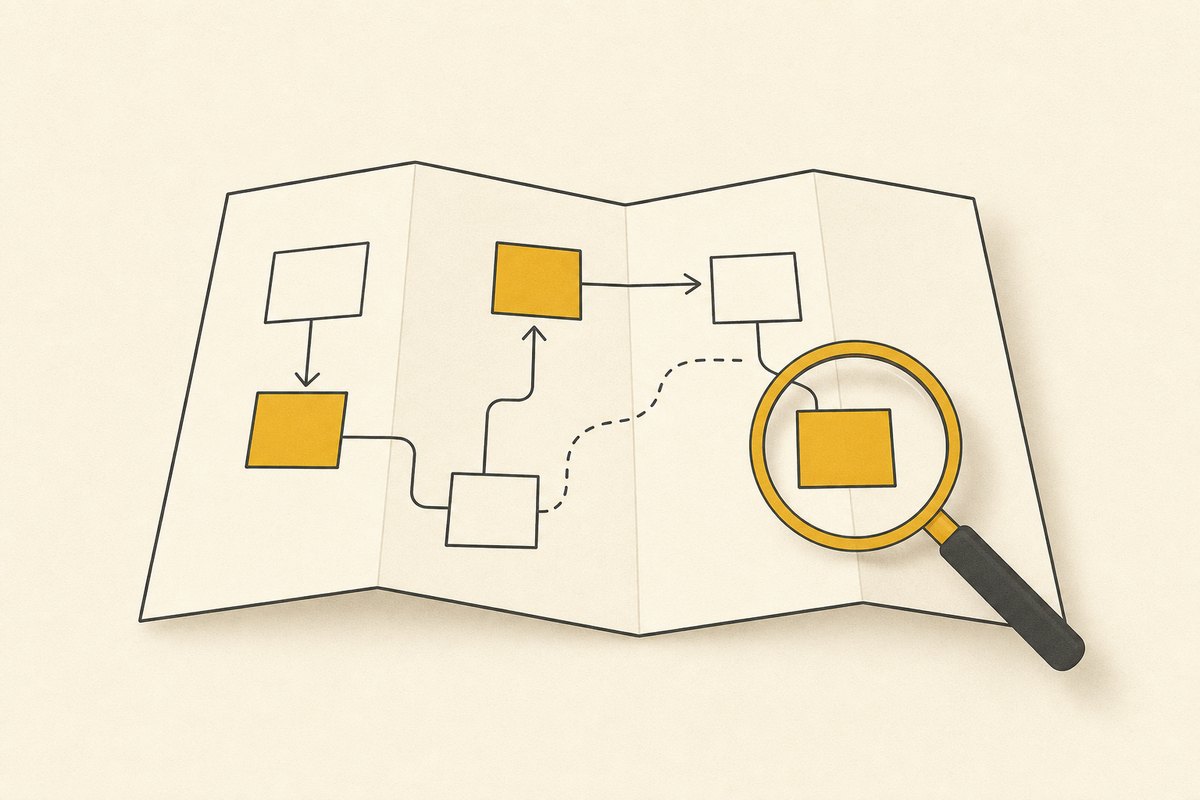
Step one: the process map
We list the processes that run through the company, from first commercial contact to invoicing and after sales. For each one, three things matter: what triggers it, the real sequence of steps, and what comes out of it.
"Real" is the important word. The process written in a procedure and the process executed on a busy Tuesday afternoon are rarely the same. It is the second one that must be automated, or fixed first.
Step two: the interviews
We talk to the people who do the work, not only to those who organise it. The questions are simple: what takes you the most time, what do you redo several times, what forces you to wait for someone else, where are you afraid of making a mistake.
These interviews surface two kinds of subject. The repetitive, visible tasks that everyone mentions. And the invisible friction: copying information from one tool into another, hunting for a document, the follow up nobody remembers. The second category often costs more than the first.
Step three: the numbers
A process without numbers cannot be prioritised. We measure four quantities for each one:
- Volume. How many times per week or per month, with which seasonal peaks.
- Time. The real human time per occurrence, waiting time included.
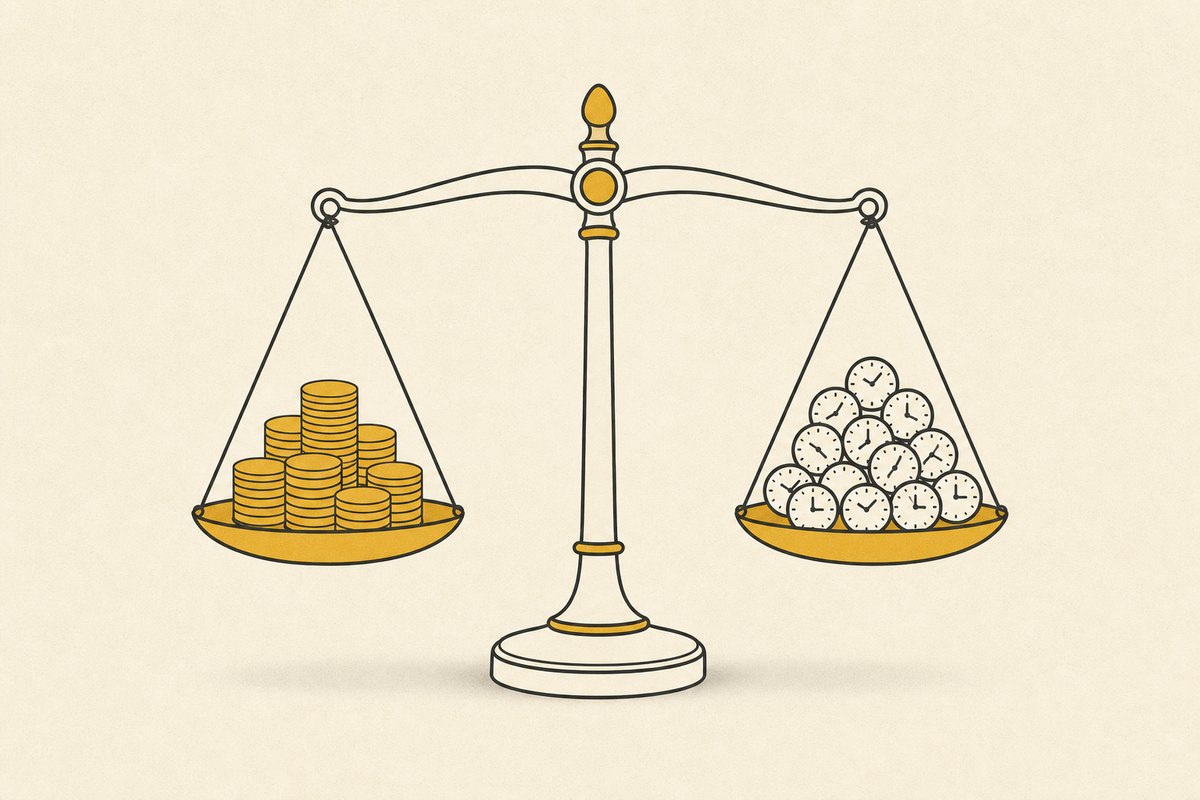
- Cost. That time multiplied by a loaded hourly cost, plus the cost of observed errors.
- Risk. What happens if the step is done late, done badly, or not done at all.
Those four numbers settle most arguments. A painful but rare task drops down the list. A mundane task repeated two hundred times a month rises immediately.
Step four: the state of the tools and the material
We then look at what an automation will be able to lean on: the tools in place, what they can expose, the quality of the data, and whether each business rule is written down anywhere. A company whose prices live in three different files does not have an AI problem, it has a single source of truth problem. And that is something to fix before, not during.
An automation does not correct wrong information. It spreads it faster.
Step five: prioritisation
We cross three axes: impact, feasibility and risk. Impact comes from the numbers. Feasibility depends on technical access, rule stability and available material. Risk measures what an error would cost, which in turn determines where human validation belongs.
Out of that comes a short ordered list, each line carrying an estimated gain, an estimated effort and the chosen operating mode. That is the only deliverable that matters at this stage: a running order, not a wish list.
What it looks like in practice
At UNYX this phase has a name and a format: the digital maturity audit, which produces a costed picture, then the framing stage, which turns that picture into a dated roadmap. It takes from a few days to three weeks depending on company size. It ends with a decision, including the decision to automate nothing for now if the numbers do not justify it.
The signal to watch for is simple. If a provider proposes an architecture before seeing your volumes and your costs, they are not selling a solution to your problem: they are selling their catalogue.