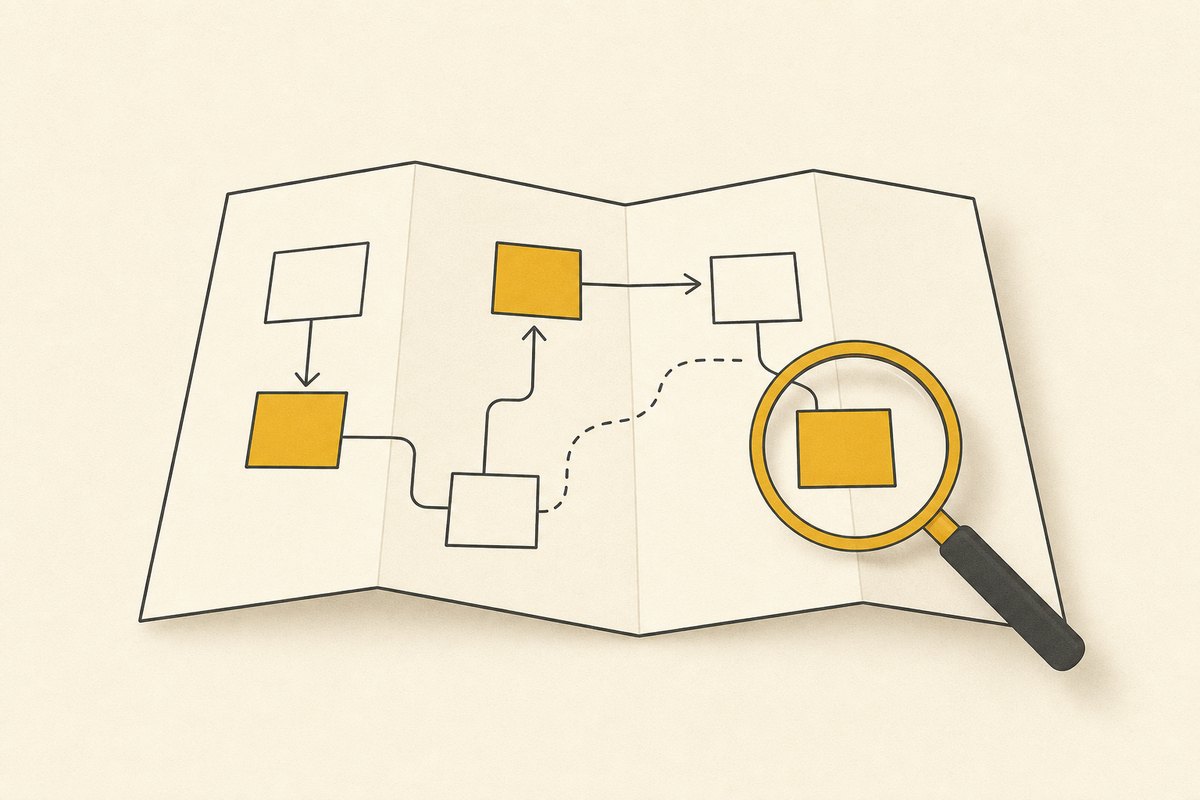
A free, automated audit does one specific thing: it tells you within minutes whether there are problems visible from the outside, and how serious they are. It's a first-level review. Nothing more, nothing less.
What it actually sees
- Performance: loading speed, page weight, behavior on mobile.
- Technical foundations: indexing, heading structure, tags, redirects, errors.
- Apparent security: certificate, headers, obvious exposure.
- Consistency of information: contact details, legally required notices, duplicate content.
These elements can be measured without knowing anything about your business. That's what makes them possible to automate, and it's also the limit.
What it can't see
No automated audit can judge whether your offer is clear to a buyer, whether your price fits your positioning, or whether your form asks for three fields too many for your type of customer. Those questions require an understanding of your market.
It also can't see what happens after the click: how quickly you call back, the quality of your reply, what becomes of the inquiries. And that's often where the real game is played.
An automated audit evaluates your website. It doesn't evaluate your business.
How to read a result without getting it wrong
Two opposite mistakes lie in wait. The first: panicking over a low score when the problems detected are minor and easy to fix. The second: feeling reassured by a good score when the site sells nothing. A fast, technically flawless site can perfectly well convert nobody.
The right way to read the report is to look for findings with a direct commercial consequence: an offer page that doesn't work on mobile, a broken form, a loading time that drives people away. The rest is maintenance.
When to go further
A thorough review is justified in three cases: when traffic exists but doesn't turn into inquiries; when results are dropping for no identified reason; when a major investment is on the table, such as a redesign, a campaign or a new channel. In all three cases, human analysis costs less than the mistake it prevents.
What to expect from it, and nothing more
Use the free audit for what it is: a quick check that tells you whether something is on fire somewhere. If it only flags maintenance points, fix them and move on. If it flags a problem that directly affects how people get in touch with you, deal with it first: that's money walking out the door every day.
A free audit doesn't replace an analysis. It tells you whether you need one.