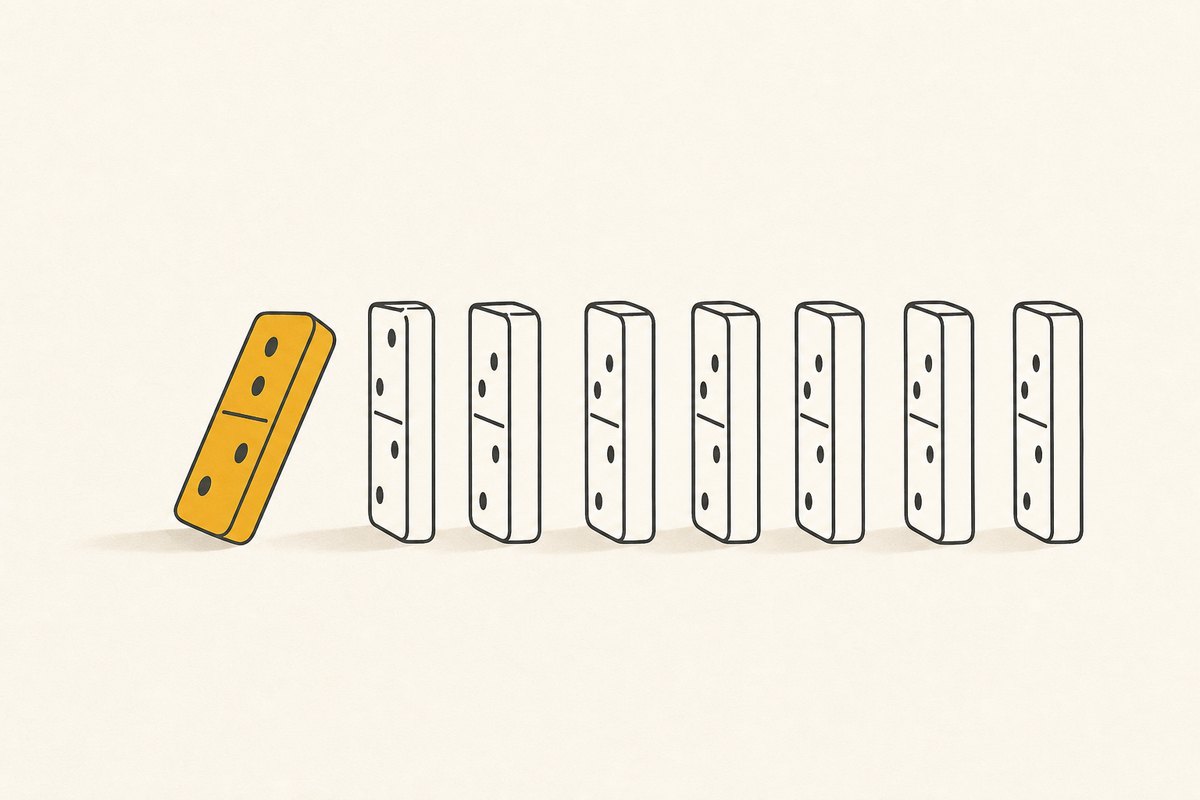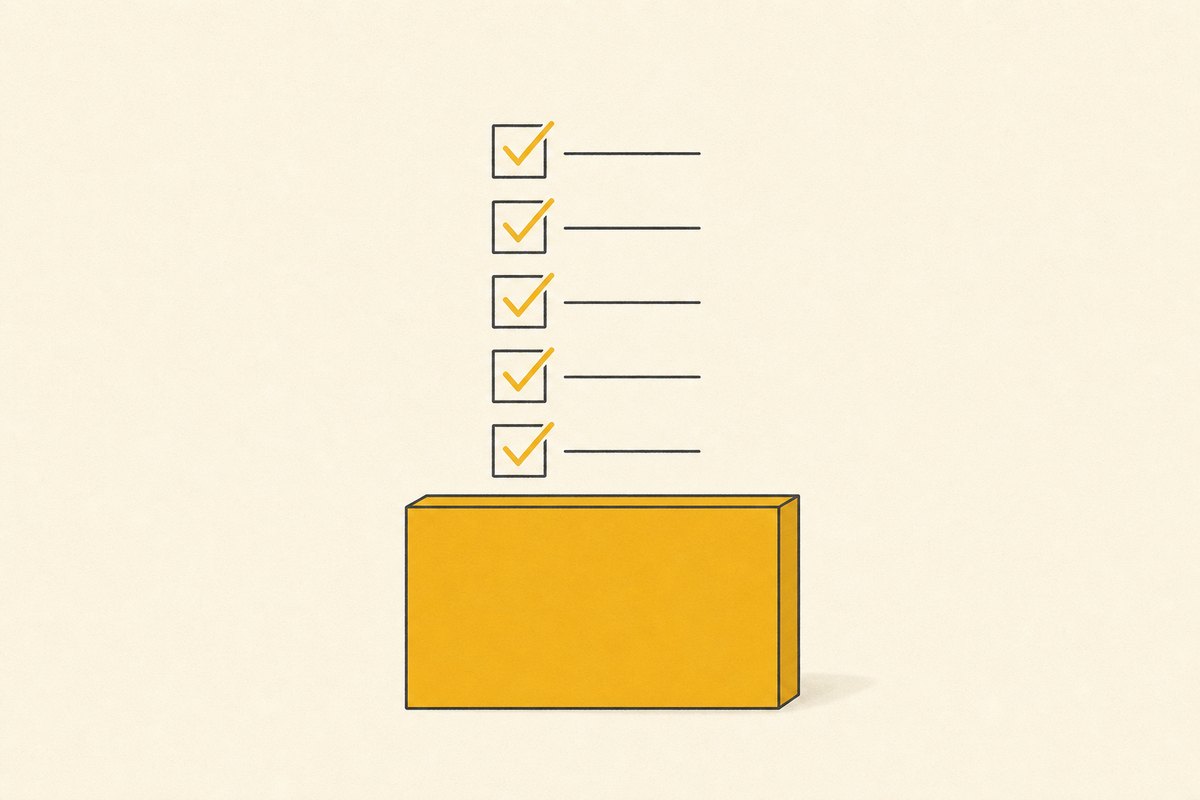
A to-do list always dies the same way. In the first few days, everything gets checked off. Then one line stays. It stays for a week, then two. Others pile up around it. A month in, the list has become a guilt-inducing object you no longer open.
The explanation rarely has to do with motivation. It has to do with what was written on the line.
The line that blocks you is always a disguised project
“Redo the website.” “Follow up with former clients.” “Set up tracking.” These lines look like tasks, but none of them can be started as they are. They assume a dozen decisions made beforehand, and that is precisely why they get postponed.
An actionable task answers one simple question: can I start on it right now, without having to decide anything first? “Write the list of the ten clients to call back” is a task. “Follow up with former clients” is a project.
A line you postpone three times isn't a hard task. It's a poorly broken-down task.
Breaking tasks down is the real work
Breaking a task down takes mental effort: you have to anticipate the sequence, spot the dependencies, decide the order. That is exactly what we avoid when we jot down a list quickly at the end of the day. The result: we put off not the work, but the thinking about the work.
- A task should fit in a single work session; beyond that, it gets debated instead of done.
- It should start with a concrete action verb: call, write, compare, send.
- It should have an identifiable end: you should know without debate whether it's done.
- It shouldn't depend on anyone else, otherwise the real task is “get X's answer.”
The second killer: no committed priority
A forty-line list with no hierarchy forces you to make a judgment call every time you look at it. Repeating that trade-off is tiring, and in the end you avoid it: you do what's easy rather than what matters.
Three priorities a day, chosen the day before, are enough. The rest waits without guilt: a waiting list isn't a failure, it's a reserve.
What it changes for a team
What is true for one person becomes critical with several. A vague task handed to someone comes back unfinished, or different from what was expected. The time spent asking again, clarifying and correcting far exceeds what a clean breakdown would have cost at the start.
Spot the lines you've postponed twice
Open your list and look for the lines you've postponed more than twice. For each one, write the first truly actionable step, then delete the original line. The list will get longer and, for the first time in a long while, it will move forward.
You never carry out a project. You carry out its first task, provided you've written it down.