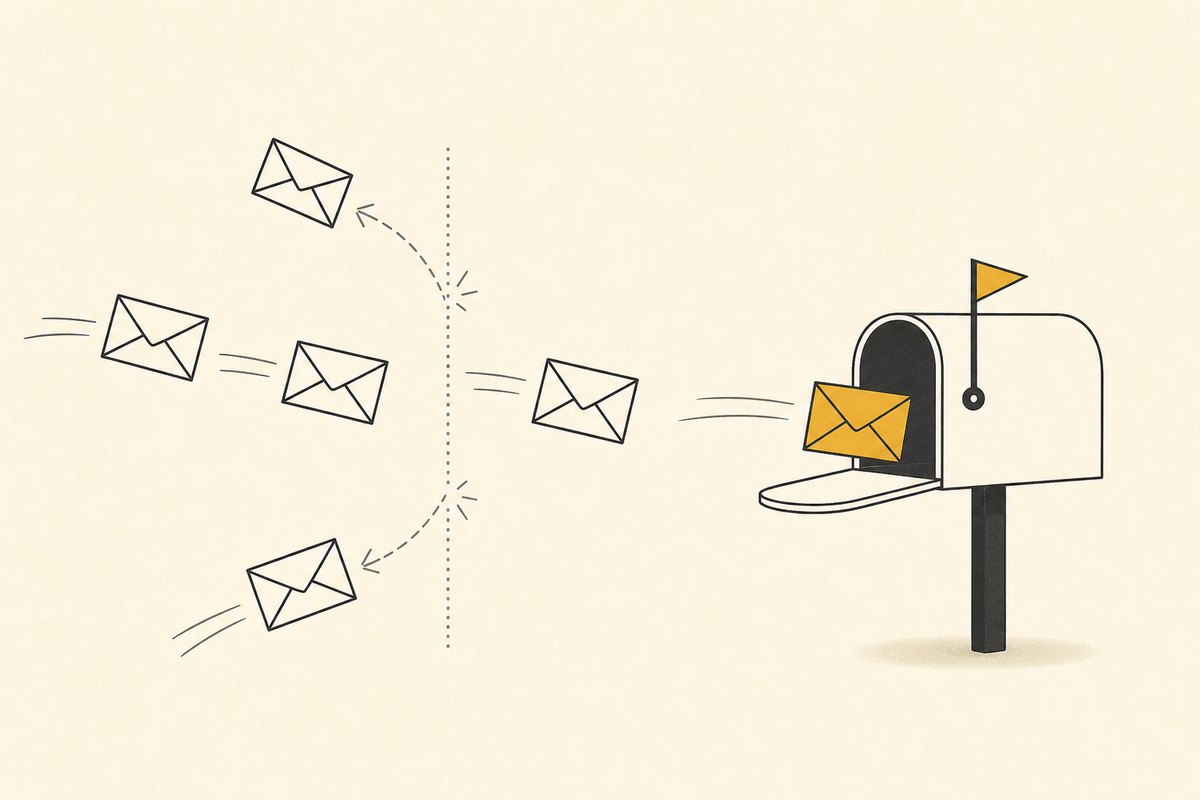
"How many times a month should we write?" has no universal answer. A weekly letter that its readers look forward to is an asset; a monthly letter nobody cares about is a nuisance. It isn't the rhythm that wears people out, it's the balance between what the message asks of them and what it gives back.
The criterion: do you have something to say?
That question comes before the calendar. A business with nothing new to share that forces itself into a weekly send will produce filler, and filler is paid for in unsubscribes, then in spam complaints.
Conversely, a business with frequent news, changing availability or genuine updates can write often without tiring anyone. Readers judge usefulness, not frequency.
Nobody unsubscribes because you write too often. They unsubscribe because you write for no reason.
The two numbers that correct your rhythm
- The unsubscribe rate per send. If it keeps climbing, you're asking for more than you give.
- Engagement over time: the share of recipients who open at least one of the last three messages. It's the best indicator of fatigue, and more reliable than the open rate of a single send.
Segment rather than cut back
When fatigue shows up, the reflex is to reduce the frequency for everyone. That's rarely the right answer: your most engaged readers were only too happy to receive more.
Segmenting lets you write more often to those who are interested and less often to those who are drifting away. It's more effective, and it protects your sender reputation: inactive subscribers are the ones that weigh most heavily on deliverability.
The message that never wears people out
A strictly useful message, such as a practical piece of information, an expected reminder, an availability or a tip that can be applied the same day, never tires anyone, whatever its frequency. What wears people out is promotion repeated with nothing new in it. The rule to follow is simple: give several times before asking once.
Set a rhythm you can keep up for six months
Set your rhythm based on what you can realistically sustain for six months, measure unsubscribes and engagement over three sends, then adjust. A monthly letter you actually send is worth infinitely more than a weekly letter abandoned after five weeks.
Regularity creates habit. Irregularity creates oblivion.