Prospecting email has a bad reputation, largely deserved. Yet it remains one of the few channels that can reach a decision-maker directly. The difficulty isn't sending: it's earning the ten seconds they'll give you.
The rules, in plain terms
In a professional context, prospecting by email is possible without prior consent as long as the message is relevant to the recipient's role, the sender is clearly identified, and the recipient can opt out immediately and easily.
Two obligations are non-negotiable: the source of the addresses must be known and documented, and any request to stop must be honored without delay. These aren't formalities: they are the points on which a complaint succeeds.
A prospecting message that is flawless in substance but impossible to stop is a complaint waiting to happen.
Why 95% of messages fail
- They talk about the sender. “We are a company specializing in…”: the reader has no reason to keep going.
- They're obviously automated. Personalization limited to a first name fools no one anymore.
- They ask for too much. Requesting thirty minutes of someone's calendar at first contact is disproportionate.
- They have no clear purpose. The recipient shouldn't have to guess what it's about.
What still works
A short message that shows in one line that you've actually looked at the company in question, that presents a verifiable observation rather than a sales pitch, and that asks for one tiny thing: a yes or no reply, not a meeting. The test is simple: the message should be readable in full, standing up, on a phone.
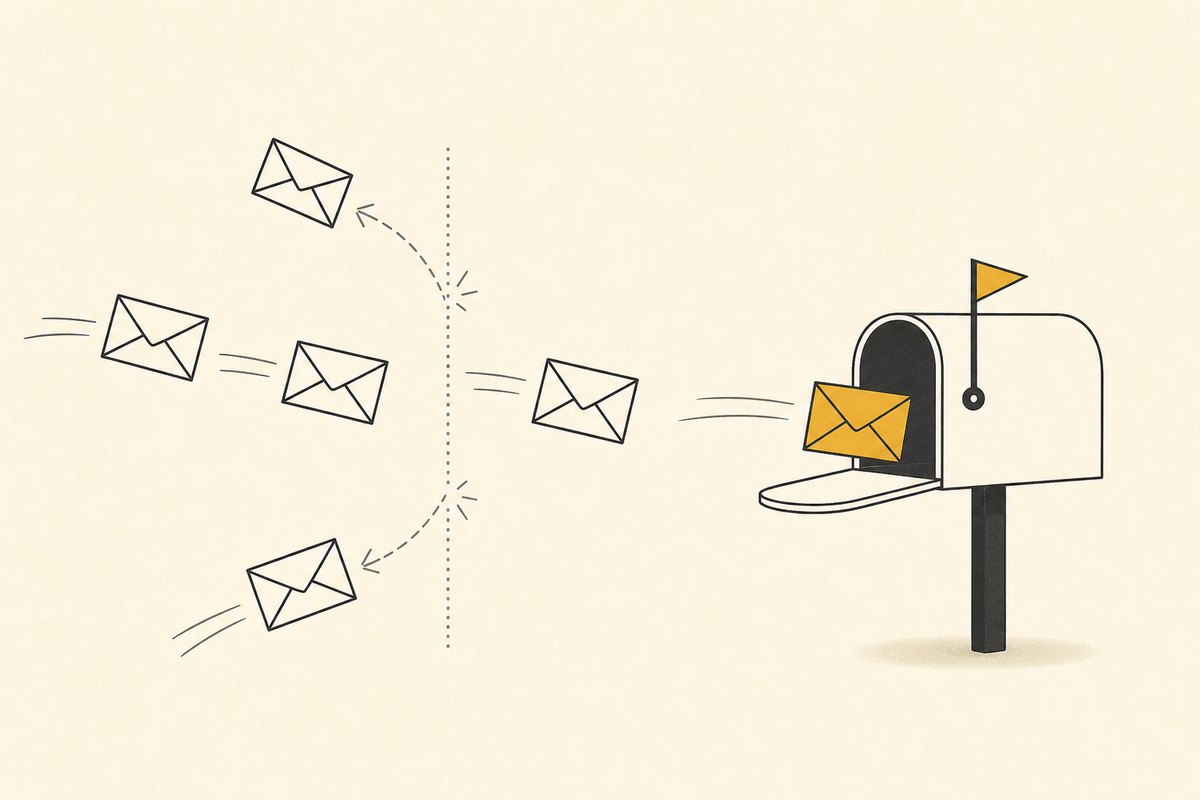
Targeting matters more than writing. A hundred messages sent to companies that are genuinely concerned produce more than three thousand sent to a broad list. And they damage your sender reputation far less.
The follow-up: just one, and a useful one
A single follow-up a few days later, bringing something new, noticeably increases replies. Three automated follow-ups repeating the same message mostly produce spam reports. Silence isn't an obstacle to overcome: it's an answer.
Reread it as the recipient
Before sending, reread your message and ask yourself: if I received this, would I reply? Then check that the source of your addresses is documented and that unsubscribing works. These two checks separate prospecting from a mass send that will cost you more than it brings in.
Cold prospecting isn't dead. Prospecting with no effort at targeting is.