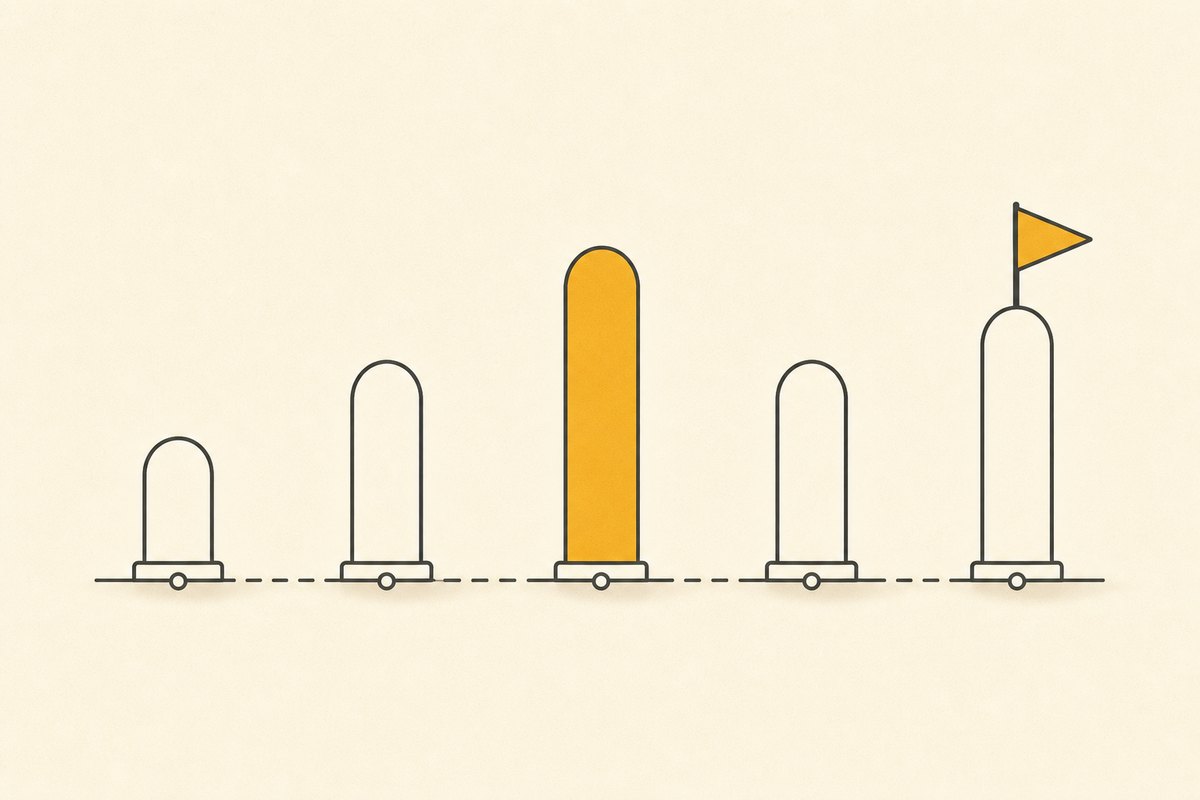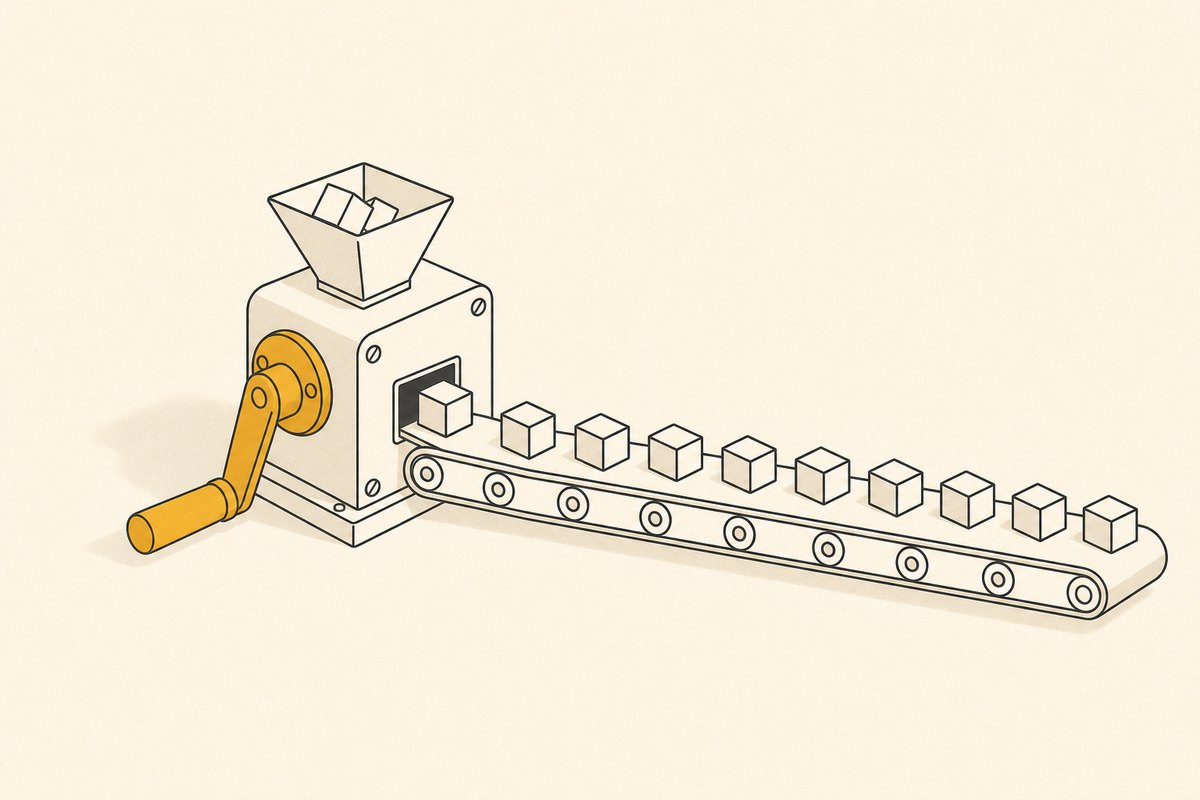
There are two ways to double your revenue. The first is to duplicate everything: twice the sales time, twice the data entry, twice the follow-up. The second is to change how the work gets done, so that the extra volume costs almost nothing. The first is addition. The second is a change of scale.
Most companies that “can't scale” don't have a demand problem. They have a structural problem: every new customer automatically adds to the human workload, because nothing was designed to absorb volume.
The simple test: what happens if you double tomorrow?
Take your business as it is today and imagine twice as many requests next Monday. List what breaks. In almost every case, production isn't what breaks first: it's request sorting, follow-ups, invoicing, after-sales support. In other words, coordination.
This test takes thirty minutes and replaces months of hesitation. It reveals the three or four points where volume immediately turns into overload. These are exactly the ones to fix before spending another euro on acquisition.
Investing in acquisition before fixing coordination is like increasing the flow through a leaking pipe.
What gets duplicated and what gets systematized
Not all tasks are equal. It helps to sort them into three families:
- What must stay human. The relationship, the negotiation, the judgment calls, the craft itself. This is what sets you apart: automating it would make you a commodity.
- What must be systematized. Sorting, qualification, follow-ups, reminders, reports, reporting figures. Repetitive and low in added value, but essential.
- What must disappear. Double data entry, copied files, approvals that have never blocked anything. Many companies automate tasks that should have been eliminated.
This sorting is the real strategic work. Once it's done, tooling becomes an obvious consequence, not a risky choice between three trendy software products.
The hidden cost: management time
In a growing small business, the scarcest resource is neither money nor talent: it's the owner's time. Every process that isn't systematized eats up management attention: a decision, a follow-up, a check. This expense appears on no line of the accounts, yet it is what caps growth.
So the right metric is not “how much does this tool cost?” but “how many decisions a week does this process force me to make?” A system that removes ten weekly micro-decisions is often worth more than an extra acquisition channel.
Why order matters more than ambition
The right order is almost always the same: first, get clarity (know where customers come from and where they get lost), then make the chain reliable (nothing gets lost, everything is tracked), and only then push volume. Reversing this order produces growth that costs more than it earns.
A company that triples its ad spend without addressing its capacity to handle the demand mostly ends up with unhappy prospects and an exhausted team. Revenue rises, margin falls, quality slips, and the following year people talk about “uncontrolled growth.”
What if volume doubled tomorrow?
Before you accelerate, answer three questions: what happens if volume doubles tomorrow, which repetitive tasks consume the most management time, and what would be the first process to systematize to free up that time? The answers form your scaling roadmap, in order.
Scaling up isn't working more. It's making sure the next customer costs less to serve than the last one.