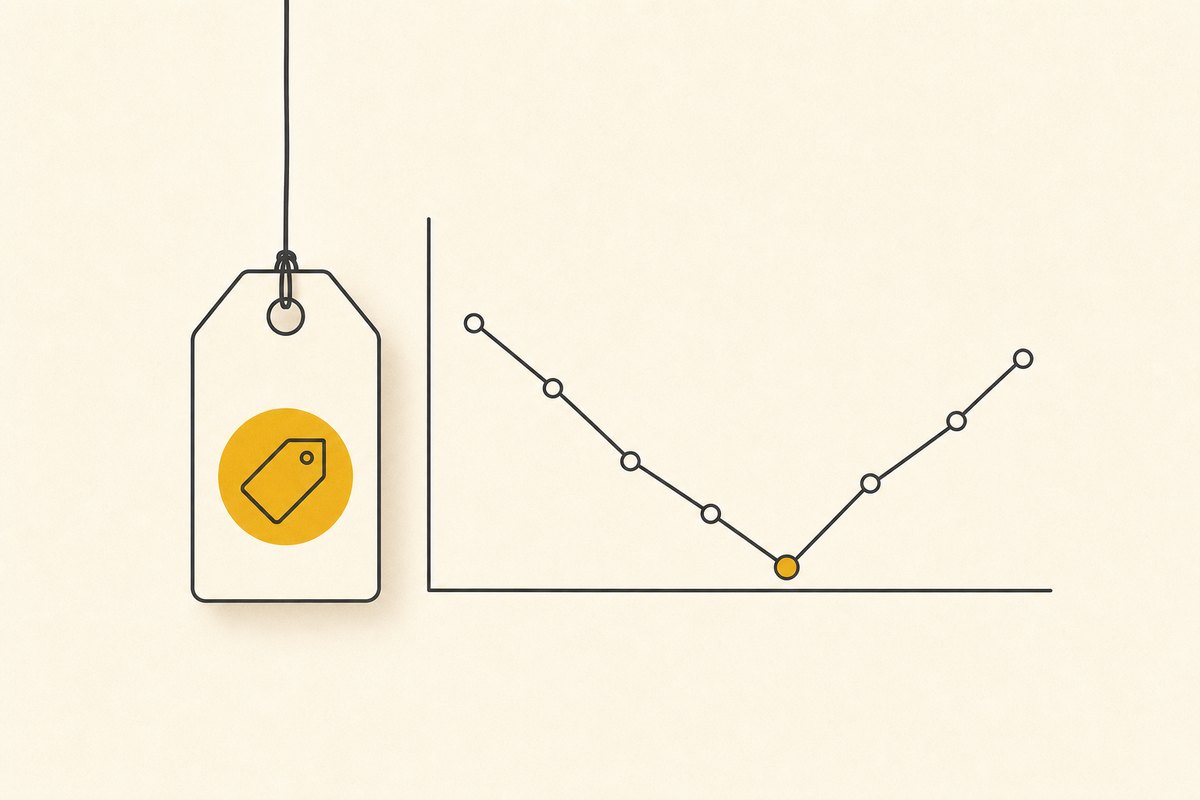
Any announcement of a price reduction must state the lowest price charged by the business during the 30 days before the promotion. The rule applies across the European Union, online and in store.
It targets one specific tactic: raising a price a few days before a sales event so you can then advertise a spectacular discount. The reference price is no longer the one you choose to display. It is a fact, measurable in your own price history.
What the rule prohibits in practice
Using the manufacturer's recommended price as a reference when you have never charged it. Going back to the old price from six months ago. Displaying a percentage calculated on a price nobody has ever paid at your shop.
If your product sold for €79 for three weeks and then for €69 for one week, the reference is €69, not €79. The fact that €79 is the "normal" price changes nothing.
The only exception provided for concerns comparison with the prices charged by other businesses: that is not the same thing as announcing a reduction on your own price.
The trap of permanent promotions
Many shops leave a crossed-out price on display permanently, because it helps sell. After thirty days of uninterrupted promotion, the lowest price charged becomes the promotional price itself: the displayed reduction drops to zero, and the display becomes open to challenge.
The same logic applies to automatic discount codes applied to the whole catalog and to "-20%" banners that never switch off.
What it costs
A non-compliant reduction announcement counts as a misleading commercial practice. The DGCCRF (the French consumer protection authority) points to the penalty: two years of imprisonment and a €300,000 fine. It checks these rules during its regular operations, particularly in periods of heavy promotional activity, such as the sales and Black Friday.
Three things to check in your shop
Keep your price history. It is the condition for being able to justify a reference price. Many shops overwrite the price without keeping a record: proof then becomes impossible to produce.
Look at how long your promotions run. A campaign that lasts more than thirty days can no longer rely on the previous price.
Check what your theme really displays. On many shops, the crossed-out price comes from a manually filled "compare-at price" field, with no link to the price actually charged. This is the issue that causes problems most often, and it is purely technical.
The right reflex
Treat the reference price as calculated data, not as a sales argument. A shop that knows, for each product, what its lowest price was over the last thirty days no longer has to ask the question when launching a campaign.
Source: DGCCRF practical guide "Annonces de réduction de prix", accessed September 10, 2026.