Count the software your company has signed up for over the past three years, then count the tools people actually use every week. The gap is rarely flattering, and it almost never comes down to features.
A tool first dies of its entry cost: an account to create, an interface to learn, a place to find in an already full day. Three weeks later, the tab no longer gets opened. The feature was there, but the habit never came.
What email gives you for free
The inbox is already open. It is open for the CEO and for the sales rep, on the computer and on the train. Nobody needs training, nobody has an extra password to remember, and nobody has to decide to go there: they are already there.
It's not just a matter of convenience. Three properties of email, which we barely notice because they are so old, solve problems that newer apps handle poorly.
- The thread is a memory. Replying within an existing message means saying “let's keep going with the same thing” without having to spell it out.
- The attachment is universal. Sending four invoices requires no import, no imposed format, no learning curve.
- Forwarding is a gesture everyone knows. “Take a look at this and tell me what you think” is a sentence everyone already knows how to write.
The best tool is not the one with the most features, it's the one you still open after three months.
The thread, a natural memory
In a conversation made of messages, context travels on its own. You ask for a list, you receive it, you reply “keep only the ones that have a website.” The word “ones” only makes sense because the conversation exists, and nobody had to reopen a file or select a project from a menu.
Modern interfaces rebuild this behavior at great expense, with workspaces, projects and histories to navigate. Email has always had it, with no setup.
The limits you need to know about
Email is not magic, and two of its weaknesses deserve to be addressed head on rather than brushed aside.
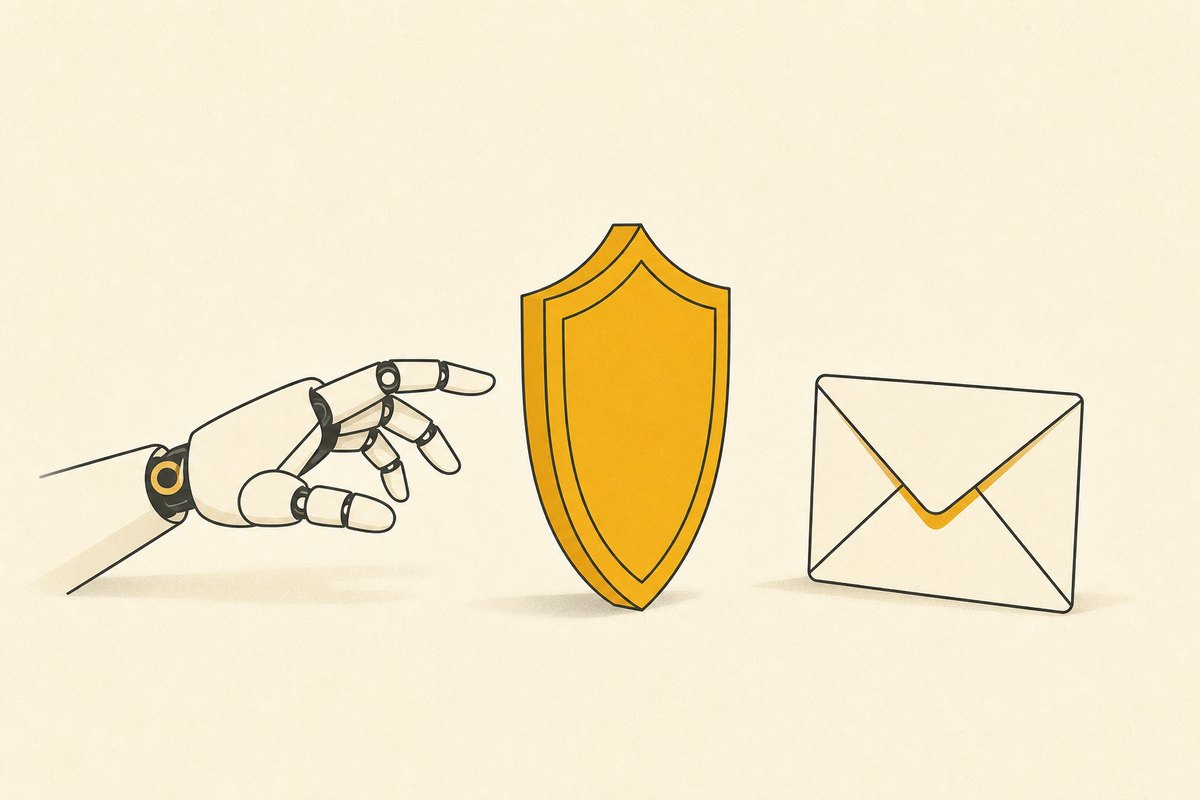
First, it authenticates nothing. The name displayed in the sender field is just text that can be forged, and email's protections are not always carried through to the recipient. Entrusting company data to an address simply because it “looks like” yours would be a mistake. You need a proper identification mechanism, and you need to verify it.
Second, it doesn't show progress. A long-running task has no progress bar: you wait without knowing. The fix is simple and comes down to a rule of courtesy: acknowledge receipt once, then stay quiet until the result arrives, rather than flooding the inbox with status messages.
When a dashboard still helps
Nothing forces you to choose. A web interface keeps all its value for what email does poorly: connecting services, managing everyone's permissions, finding a file produced three weeks ago, tracking activity and billing.
The right rule is frequency. What you do every day should fit in the inbox. What you do once a month can ask for a click in an app. The reverse produces exactly the kind of tools nobody opens anymore.